A Scandal in Bohemia
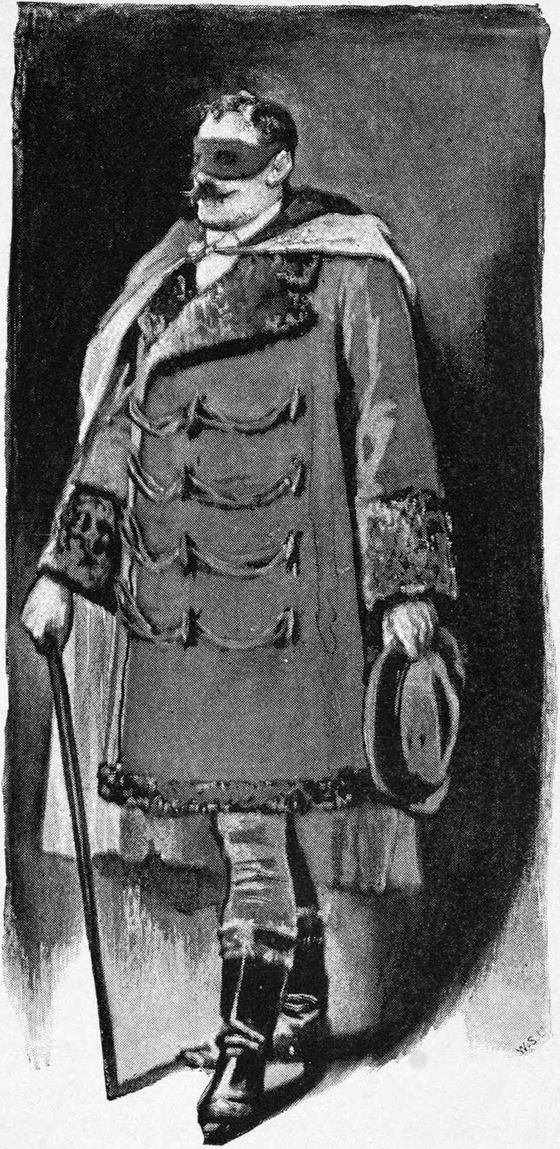
Illustration: Sidney Paget, public domain, via Wikimedia Commons
I.
To Sherlock Holmes she is always the woman. I have seldom heard him call her anything else. In his eyes she outshines every other woman alive. It wasn’t that he felt anything like love for Irene Adler. All emotions, and that one most of all, were hateful to his cold, precise and admirably balanced mind. He was, I think, the most perfect reasoning and observing machine the world has ever seen, but as a lover he would have been hopelessly out of place. He never spoke of the softer feelings except with a joke or a sneer. They were wonderful things for an observer, excellent for pulling back the curtain on why people do what they do. But for a trained reasoner to let them into his own delicate, finely tuned temperament would be to bring in a distraction that could throw doubt on everything his mind produced. Grit in a sensitive instrument, or a crack in one of his own high-power lenses, would not upset him more than a strong emotion would upset a nature like his. And yet there was only one woman for him, and that woman was the late Irene Adler, of doubtful and questionable memory.
I had seen little of Holmes lately. My marriage had drifted us apart. My own complete happiness, and the home-centered interests that rise up around a man who first finds himself master of his own household, took all my attention. Holmes, meanwhile, who loathed every form of society with his whole Bohemian soul, stayed on in our lodgings in Baker Street, buried among his old books, swinging from week to week between cocaine and ambition, between the drowsiness of the drug and the fierce energy of his own keen nature. He was still, as ever, deeply drawn to the study of crime, and he spent his immense gifts and extraordinary powers of observation following up clues and clearing up mysteries the official police had given up as hopeless. Now and then I heard some vague account of what he was doing: his summons to Odessa in the case of the Trepoff murder, his solving of the strange tragedy of the Atkinson brothers at Trincomalee, and finally the mission he had carried out so delicately and successfully for the reigning family of Holland. Beyond these signs of life, which I shared with every reader of the daily papers, I knew little of my old friend and companion.
One night, on the twentieth of March, 1888, I was coming back from a visit to a patient (for I had returned to private practice) when my route took me down Baker Street. As I passed the door I remembered so well, a door that will always be tied in my mind to my courtship and to the dark events of the Study in Scarlet, I was seized by a sharp desire to see Holmes again and find out what he was using those extraordinary powers on. His rooms were brightly lit, and even as I looked up I saw his tall, thin figure pass twice, a dark silhouette against the blind. He was pacing the room quickly, eagerly, head sunk on his chest, hands clasped behind him. To me, who knew his every mood and habit, that posture told the whole story. He was at work again. He had climbed out of his drug-made dreams and was hot on the scent of some new problem. I rang the bell and was shown up to the room that had once been partly mine.
He wasn’t gushing. He seldom was. But he was glad to see me, I think. With hardly a word, but with a kindly eye, he waved me to an armchair, tossed over his case of cigars, and pointed to a liquor case and a gasogene in the corner. (The gasogene, for anyone who has never met one, is a pair of wire-caged glass globes that makes soda water at home: fill the lower globe with water and drop tartaric acid and bicarbonate of soda into the smaller upper one; when a little water reaches them they react to give off carbon dioxide, which is forced into the water below until it fizzes. Holmes kept his in better order than his correspondence.) Then he stood in front of the fire and looked me over in his peculiar, inward-turned way.

Illustration: Sidney Paget, public domain, via Wikimedia Commons
“Marriage suits you,” he remarked. “I think, Watson, that you’ve put on seven and a half pounds since I last saw you.”
“Seven!” I answered.
“Really? I’d have thought a little more. Just a trifle more, I fancy, Watson. And in practice again, I see. You didn’t tell me you meant to go back into harness.”
“Then how do you know?”
“I see it, I deduce it. How do I know that you’ve been getting yourself very wet lately, and that you have a most clumsy and careless servant girl?”
“My dear Holmes,” I said, “this is too much. You’d certainly have been burned as a witch if you’d lived a few centuries ago. It’s true I took a country walk on Thursday and came home in a dreadful mess, but I’ve changed my clothes since, so I can’t imagine how you worked that out. As for Mary Jane, she’s hopeless, and my wife has given her notice. But again, I don’t see how you know.”
He chuckled and rubbed his long, nervous hands together.
“It’s simplicity itself,” he said. “My eyes tell me that on the inside of your left shoe, just where the firelight hits it, the leather is scored by six almost parallel cuts. Obviously someone made them by scraping very carelessly around the edge of the sole to get the crusted mud off. Hence my double deduction: you’d been out in vile weather, and you have a particularly vicious boot-slashing specimen of the London maid-of-all-work. As for your practice: if a gentleman walks into my rooms smelling of iodoform, with a black mark of nitrate of silver on his right forefinger, and a bulge on the right side of his top hat where he’s tucked his stethoscope, I’d have to be dull indeed not to declare him an active member of the medical profession.”
He was right on every count, and the chemistry was sound, which annoyed me more. Iodoform is the yellow antiseptic powder we dust on wounds, and it slowly gives off iodine, with a sharp, sweetish smell that clings to a doctor like a signature. And nitrate of silver, the “lunar caustic” we use to burn away warts and proud flesh, is colorless when you touch it, but light and the skin’s own proteins turn the silver in it back into fine black metal. The stain shows up hours later and won’t wash off for days. I had, in other words, been walking around London wearing my profession on my finger.
I couldn’t help laughing at how easily he explained it. “When I hear you give your reasons,” I said, “it always seems so ridiculously simple that I could do it myself. Yet each time, I’m baffled until you explain. And I believe my eyes are as good as yours.”
“Quite so,” he answered, lighting a cigarette and throwing himself into an armchair. “You see, but you do not observe. The distinction is clear. For example, you’ve often seen the steps that lead up from the hall to this room.”
“Often.”
“How often?”
“Well, some hundreds of times.”
“Then how many are there?”
“How many? I don’t know.”
“Quite so! You have not observed. And yet you have seen. That’s exactly my point. Now, I know that there are seventeen steps, because I have both seen and observed. By the way, since you’re interested in these little problems, and kind enough to write up one or two of my trifling adventures, you may be interested in this.” He tossed over a sheet of thick, pink-tinted notepaper that had been lying open on the table. “It came by the last post,” he said. “Read it aloud.”
The note had no date, no signature and no address.
“There will call upon you to-night, at a quarter to eight o’clock,” it said, “a gentleman who desires to consult you upon a matter of the very deepest moment. Your recent services to one of the royal houses of Europe have shown that you are one who may safely be trusted with matters which are of an importance which can hardly be exaggerated. This account of you we have from all quarters received. Be in your chamber then at that hour, and do not take it amiss if your visitor wear a mask.”
“This really is a mystery,” I said. “What do you think it means?”

Illustration: Sidney Paget, public domain, via Wikimedia Commons
“I have no data yet. It is a capital mistake to theorize before one has data. Without noticing, one begins to twist facts to suit theories, instead of theories to suit facts. But the note itself. What do you deduce from it?”
I studied the handwriting, and the paper it was written on.
“The man who wrote it was presumably well off,” I said, trying to copy my friend’s methods. “Paper like this couldn’t be bought for less than half a crown a packet.” (Half a crown being two shillings and sixpence, a sum my patients would not spend on a year’s letters.) “It’s unusually strong and stiff.”
“Unusual. That’s the very word,” said Holmes. “It isn’t English paper at all. Hold it up to the light.”
I did, and saw a large “E” with a small “g,” a “P,” and a large “G” with a small “t” woven into the texture of the paper.
It was a watermark, and I understood, now that I looked, how it worked. Paper is made by lifting a wet pulp of fibers out of a vat on a fine wire mesh. If the maker twists a design out of wire and sews it onto the mesh, the pulp lies a little thinner over the raised wire. Thinner paper lets more light through, so the design glows when you hold the sheet to a lamp and vanishes when you lay it flat. A secret, in other words, written in the paper itself before a word of ink touched it.
“What do you make of that?” asked Holmes.
“The maker’s name, no doubt. Or his monogram, rather.”
“Not at all. The ‘G’ with the small ‘t’ stands for ‘Gesellschaft,’ which is German for ‘Company.’ It’s the usual short form, like our ‘Co.’ ‘P,’ of course, stands for ‘Papier.’ Now for the ‘Eg.’ Let’s look at our Continental Gazetteer.” He took down a heavy brown volume from the shelf. “Eglow, Eglonitz—here we are, Egria. It’s in a German-speaking country, in Bohemia, not far from Carlsbad. ‘Remarkable as being the scene of the death of Wallenstein, and for its numerous glass-factories and paper-mills.’ Ha, ha, my boy, what do you make of that?” His eyes sparkled, and he sent up a great blue triumphant cloud of smoke.
“The paper was made in Bohemia,” I said.
“Precisely. And the man who wrote the note is a German. Notice the odd construction of the sentence: ‘This account of you we have from all quarters received.’ A Frenchman or a Russian couldn’t have written that. It’s the German who is so rude to his verbs, shoving them to the very end of the sentence. So it only remains to find out what this German wants, this German who writes on Bohemian paper and would rather wear a mask than show his face. And here he comes, if I’m not mistaken, to settle all our doubts.”
As he spoke there was the sharp clatter of hoofs and the grate of wheels against the curb, then a hard pull at the bell. Holmes whistled.
“A pair, by the sound,” he said. “Yes,” he went on, glancing out of the window. “A nice little brougham and a pair of beauties. A hundred and fifty guineas apiece. There’s money in this case, Watson, if there’s nothing else.”
A brougham is a small, closed, private carriage, the kind a rich man keeps for himself, and a guinea is a pound and a shilling. Three hundred guineas for the horses alone was more than I earned in a good year.
“I think I’d better go, Holmes.”
“Not a bit, Doctor. Stay where you are. I’m lost without my Boswell. And this promises to be interesting. It would be a pity to miss it.”
“But your client—”
“Never mind him. I may want your help, and so may he. Here he comes. Sit in that armchair, Doctor, and give us your best attention.”
A slow, heavy step, which we had heard on the stairs and in the passage, stopped right outside the door. Then came a loud, commanding knock.
“Come in!” said Holmes.
The man who entered could hardly have been under six feet six inches tall, with the chest and limbs of a Hercules. His clothes were rich, with a richness that in England would be considered close to bad taste. Heavy bands of astrakhan fur slashed across the sleeves and front of his double-breasted coat, and the deep blue cloak thrown over his shoulders was lined with flame-colored silk and fastened at the neck with a brooch made of a single blazing beryl. Boots that came halfway up his calves, trimmed at the tops with rich brown fur, completed an impression of extravagant, almost barbaric luxury. He held a broad-brimmed hat in his hand, and over the upper part of his face, reaching down past the cheekbones, he wore a black mask, which he had evidently put on that very moment, since his hand was still raised to it as he came in. From the lower half of his face he looked like a man of strong character, with a thick, hanging lip and a long, straight chin that suggested determination pushed all the way to stubbornness.
“You had my note?” he asked in a deep, harsh voice with a strong German accent. “I told you I would call.” He looked from one of us to the other, as if unsure which to address.
“Please, sit down,” said Holmes. “This is my friend and colleague, Dr. Watson, who is now and then good enough to help me with my cases. Whom do I have the honor of addressing?”
“You may address me as the Count Von Kramm, a Bohemian nobleman. I understand that this gentleman, your friend, is a man of honor and discretion, whom I may trust with a matter of the most extreme importance. If not, I would much rather speak with you alone.”
I got up to go, but Holmes caught me by the wrist and pushed me back into my chair. “It’s both of us, or neither,” he said. “Anything you can say to me, you can say in front of this gentleman.”
The Count shrugged his broad shoulders. “Then I must begin,” he said, “by binding you both to absolute secrecy for two years. At the end of that time the matter will be of no importance. At present it is not too much to say that it is so weighty it may affect the history of Europe.”
“I promise,” said Holmes.
“And I.”
“You will excuse this mask,” our strange visitor went on. “The exalted person who employs me wishes his agent to remain unknown to you, and I may confess at once that the title I have just given myself is not exactly my own.”
“I was aware of it,” said Holmes dryly.
“The circumstances are extremely delicate, and every precaution must be taken to smother what could grow into an immense scandal and seriously compromise one of the reigning families of Europe. To speak plainly, the matter involves the great House of Ormstein, hereditary kings of Bohemia.”
“I was also aware of that,” murmured Holmes, settling into his armchair and closing his eyes.
Our visitor looked with some surprise at the limp, lounging figure of the man who had no doubt been described to him as the sharpest reasoner and most energetic agent in Europe. Holmes slowly opened his eyes again and looked impatiently at his gigantic client.
“If your Majesty would be good enough to state your case,” he said, “I’d be better able to advise you.”
The man sprang from his chair and paced up and down the room in uncontrollable agitation. Then, with a gesture of despair, he tore the mask from his face and flung it on the floor. “You are right,” he cried. “I am the King. Why should I try to hide it?”
“Why indeed?” murmured Holmes. “Your Majesty hadn’t said a word before I knew I was addressing Wilhelm Gottsreich Sigismond von Ormstein, Grand Duke of Cassel-Felstein, and hereditary King of Bohemia.”
It was, I reflected, hardly a feat. A man who writes on Bohemian paper, speaks with a German accent, arrives in a carriage worth a fortune, stands six and a half feet tall in royal-blue silk, and swears you to secrecy over the history of Europe is not, on the balance of the evidence, a minor clerk. The mask had hidden his eyes and nothing else.
“But you can understand,” said our visitor, sitting down again and passing a hand over his high white forehead, “you can understand that I am not used to doing such business in person. Yet the matter was so delicate that I could not trust it to an agent without putting myself in his power. I have come incognito from Prague to consult you.”
“Then please, consult,” said Holmes, shutting his eyes once more.
“The facts, briefly, are these. Some five years ago, during a long visit to Warsaw, I met the well-known adventuress Irene Adler. The name is no doubt familiar to you.”
“Kindly look her up in my index, Doctor,” murmured Holmes, without opening his eyes. For many years he had kept a system of filing every newspaper paragraph about people and things, so that it was hard to name a subject or person he couldn’t instantly supply information on. In this case I found her biography sandwiched between that of a rabbi and that of a naval staff-commander who had written a monograph on deep-sea fishes.
“Let me see!” said Holmes. “Hum! Born in New Jersey in the year 1858. Contralto—hum! La Scala, hum! Prima donna, Imperial Opera of Warsaw—yes! Retired from the operatic stage—ha! Living in London—quite so! Your Majesty, as I understand it, became entangled with this young person, wrote her some compromising letters, and now wants them back.”
“Precisely. But how—”
“Was there a secret marriage?”
“None.”
“No legal papers or certificates?”
“None.”
“Then I don’t follow your Majesty. If this young person produced her letters for blackmail or anything else, how could she prove they were genuine?”
“There is the handwriting.”
“Pooh, pooh! Forgery.”
“My private notepaper.”
“Stolen.”
“My own seal.”
“Imitated.”
“My photograph.”
“Bought.”
“We were both in the photograph.”
“Oh dear! That is very bad! Your Majesty has indeed been indiscreet.”
“I was mad. Insane.”
“You have compromised yourself seriously.”
“I was only Crown Prince then. I was young. I am only thirty now.”
“It must be recovered.”
“We have tried and failed.”
“Your Majesty must pay. It must be bought.”
“She will not sell.”
“Stolen, then.”
“Five attempts have been made. Twice, burglars in my pay ransacked her house. Once we had her luggage diverted when she traveled. Twice she has been waylaid. There has been no result.”
“No sign of it?”
“Absolutely none.”
Holmes laughed. “It’s quite a pretty little problem,” he said.
“But a very serious one to me,” the King replied reproachfully.
“Very, indeed. And what does she plan to do with the photograph?”
“To ruin me.”
“But how?”
“I am about to be married.”
“So I’ve heard.”
“To Clotilde Lothman von Saxe-Meningen, second daughter of the King of Scandinavia. You may know the strict principles of her family. She herself is the very soul of delicacy. A shadow of doubt about my conduct would end the match.”
“And Irene Adler?”
“Threatens to send them the photograph. And she will do it. I know she will do it. You do not know her, but she has a soul of steel. She has the face of the most beautiful of women and the mind of the most resolute of men. Rather than let me marry another woman, there is nothing she would not do. Nothing.”
“You’re sure she hasn’t sent it yet?”
“I am sure.”
“Why?”
“Because she has said she will send it on the day the engagement is publicly announced. That will be next Monday.”
“Oh, then we have three days yet,” said Holmes with a yawn. “That’s very lucky, as I have one or two important matters to look into just now. Your Majesty will, of course, stay in London for the present?”
“Certainly. You will find me at the Langham, under the name of the Count Von Kramm.”
“Then I’ll drop you a line to let you know how we’re getting on.”
“Please do. I shall be all anxiety.”
“Then, as to money?”
“You have carte blanche.”
“Absolutely?”
“I tell you, I would give one of the provinces of my kingdom to have that photograph.”
“And for present expenses?”
The King took a heavy chamois-leather bag from under his cloak and laid it on the table.
“There are three hundred pounds in gold and seven hundred in notes,” he said.
Holmes scribbled a receipt on a page of his notebook and handed it over.
“And Mademoiselle’s address?” he asked.
“Briony Lodge, Serpentine Avenue, St. John’s Wood.”
Holmes wrote it down. “One more question,” he said. “Was the photograph a cabinet?”
“It was.”
I didn’t see the point of the question then. A cabinet photograph is the larger of the two popular card sizes, a print mounted on stiff card about four and a quarter inches by six and a half, too big for a locket and awkward to hide in a dress. I would understand later why Holmes cared.
“Then good night, your Majesty, and I trust we’ll soon have some good news for you. And good night, Watson,” he added, as the wheels of the royal brougham rolled away down the street. “If you’d be good enough to call tomorrow afternoon at three o’clock, I’d like to talk this little matter over with you.”
II.
At three o’clock precisely I was at Baker Street, but Holmes hadn’t come back yet. The landlady told me he had left the house shortly after eight in the morning. I sat down by the fire, meaning to wait for him however long it took. I was already deeply interested in the case. It had none of the grim and strange features of the two crimes I have already written about, but the nature of the problem and the lofty rank of the client gave it a character of its own. And quite apart from the case, there was something in his masterly grip on a situation and his sharp, cutting reasoning that made it a pleasure to study his system, and to follow the quick, subtle methods by which he untangled the most hopeless knots. I was so used to his success that the very idea of his failing no longer entered my head.
It was nearly four when the door opened and a drunken-looking groom, unkempt and side-whiskered, with a flushed face and disreputable clothes, walked into the room. Used as I was to my friend’s amazing skill with disguises, I had to look three times before I was sure it was him. With a nod he vanished into the bedroom, and five minutes later came out in his usual tweed suit, respectable as ever. He shoved his hands in his pockets, stretched his legs out toward the fire, and laughed heartily for several minutes.
“Well, really!” he cried, and then he choked and laughed again until he had to lie back, limp and helpless, in his chair.
“What is it?”
“It’s just too funny. I’m sure you could never guess how I spent my morning, or what I ended up doing.”
“I can’t imagine. I suppose you’ve been watching the habits, and maybe the house, of Miss Irene Adler.”
“Quite so. But the sequel was rather unusual. I’ll tell you. I left here a little after eight this morning in the character of a groom out of work. There’s a wonderful sympathy and fellowship among horsey men. Be one of them, and you’ll learn everything there is to know. I soon found Briony Lodge. It’s a little gem of a villa, two stories, with a garden at the back but built right up to the road in front. Chubb lock on the door. Large sitting room on the right side, well furnished, with long windows almost to the floor, and those ridiculous English window catches a child could open. Behind, nothing remarkable, except that the passage window could be reached from the top of the coach-house. I walked all around it and examined it closely from every angle, but noticed nothing else of interest.
“Then I strolled down the street and found, as I expected, a mews—a lane of stables—running along one wall of the garden. I gave the stablemen a hand rubbing down their horses, and in exchange I got twopence, a glass of half-and-half, two pipefuls of shag tobacco, and as much information about Miss Adler as I could want, not to mention half a dozen other people in the neighborhood whom I didn’t care about at all, but whose life stories I was forced to listen to.”
“And what about Irene Adler?” I asked.
“Oh, she’s turned every man’s head in that part of town. She’s the daintiest thing under a bonnet on this planet. So say the Serpentine-mews, to a man. She lives quietly, sings at concerts, drives out at five every day, and returns at seven sharp for dinner. Seldom goes out otherwise, except when she sings. Has only one male visitor, but a good deal of him. He’s dark, handsome and dashing, never calls less than once a day, and often twice. He’s a Mr. Godfrey Norton, of the Inner Temple. See the advantages of a cabman as a confidant. They’d driven him home a dozen times from Serpentine-mews and knew all about him. When I’d heard everything they had to say, I started walking up and down near Briony Lodge again, thinking over my plan of campaign.
“This Godfrey Norton was clearly an important factor. He was a lawyer—the Inner Temple is one of the old societies of barristers. That sounded ominous. What was the relationship between them, and why did he keep calling? Was she his client, his friend, or his mistress? If his client, she had probably handed the photograph over to him for safekeeping. If the latter, that was less likely. On that question hung whether I should keep working on Briony Lodge or turn my attention to the gentleman’s chambers in the Temple. A delicate point, and it widened my field of inquiry. I’m afraid I’m boring you with these details, but you need to see my little difficulties if you’re to understand the situation.”
“I’m following you closely,” I said.
“I was still weighing it when a hansom cab pulled up at Briony Lodge and a gentleman sprang out. A remarkably handsome man, dark, hawk-nosed, and mustached—obviously the man I’d heard about. He seemed in a great hurry, shouted to the cabman to wait, and brushed past the maid who opened the door with the air of a man completely at home.
“He was in the house about half an hour, and I could catch glimpses of him through the sitting-room windows, pacing up and down, talking excitedly, and waving his arms. Of her I could see nothing. At last he came out, looking even more flustered than before. As he stepped up to the cab, he pulled a gold watch from his pocket and stared at it intently. ‘Drive like the devil,’ he shouted, ‘first to Gross & Hankey’s in Regent Street, and then to the Church of St. Monica in the Edgeware Road. Half a guinea if you do it in twenty minutes!’
“Off they went, and I was just wondering whether I ought to follow them when up the lane came a neat little landau, the coachman with his coat only half-buttoned and his tie under his ear, and all the straps of his harness sticking out of their buckles. It hadn’t even stopped before she shot out of the front door and into it. I only caught a glimpse of her, but she was a lovely woman, with a face a man might die for.
“‘The Church of St. Monica, John,’ she cried, ‘and half a sovereign if you reach it in twenty minutes.’
“This was much too good to miss, Watson. I was just deciding whether to run for it or to perch on the back of her landau when a cab came down the street. The driver looked twice at such a shabby fare, but I jumped in before he could object. ‘The Church of St. Monica,’ I said, ‘and half a sovereign if you reach it in twenty minutes.’ It was twenty-five minutes to twelve, and of course it was clear enough what was in the wind.”
I saw it too, now that he laid the pieces side by side. A lawyer in a frantic hurry, a gold watch checked as if every minute counted, a stop at a jeweler’s in Regent Street, a lady with her coachman only half-dressed, and both of them racing for a church before noon. Gross & Hankey’s sold rings. People do not hurry to church to pray.
“My cabby drove fast. I don’t think I’ve ever been driven faster, but the others got there before us. The cab and the landau, horses steaming, were at the door when I arrived. I paid the man and hurried into the church. There wasn’t a soul inside except the two I’d followed and a clergyman in a white surplice, who seemed to be arguing with them. All three were standing in a huddle in front of the altar. I wandered up the side aisle like any idler who’s dropped into a church. Suddenly, to my surprise, the three at the altar turned around to face me, and Godfrey Norton came running toward me as hard as he could.
“‘Thank God,’ he cried. ‘You’ll do. Come! Come!’
“‘What for?’ I asked.
“‘Come, man, come, only three minutes, or it won’t be legal.’

Illustration: Sidney Paget, public domain, via Wikimedia Commons
“I was half-dragged up to the altar, and before I knew where I was I found myself mumbling responses whispered in my ear, vouching for things I knew nothing about, and generally helping to tie Irene Adler, spinster, securely to Godfrey Norton, bachelor. It was all over in an instant, and there was the gentleman thanking me on one side and the lady on the other, while the clergyman beamed at me from the front. It was the most ridiculous position I’ve ever been in in my life, and it was the thought of it that started me laughing just now. It seems there was some irregularity in their license, the clergyman flatly refused to marry them without a witness of some kind, and my lucky appearance saved the bridegroom from having to dash into the street to find a best man. The bride gave me a sovereign, and I mean to wear it on my watch chain in memory of the occasion.”
“That’s a very unexpected turn,” I said. “And then what?”
“Well, I found my plans seriously threatened. It looked as if the couple might leave at once, which would call for very quick and energetic action on my part. At the church door, though, they separated, he driving back to the Temple and she to her own house. ‘I shall drive out in the park at five as usual,’ she said as she left him. I heard no more. They drove off in different directions, and I went off to make my own arrangements.”
“Which are?”
“Some cold beef and a glass of beer,” he answered, ringing the bell. “I’ve been too busy to think about food, and I’m likely to be busier still this evening. By the way, Doctor, I’ll need your cooperation.”
“I’ll be delighted.”
“You don’t mind breaking the law?”
“Not in the least.”
“Nor running a chance of arrest?”
“Not in a good cause.”
“Oh, the cause is excellent!”
“Then I’m your man.”
“I was sure I could count on you.”
“But what is it you want?”
“When Mrs. Turner has brought in the tray I’ll explain. Now,” he said, turning hungrily to the simple meal our landlady had provided, “I’ll have to talk while I eat, because I haven’t much time. It’s nearly five now. In two hours we must be on the scene of action. Miss Irene—or Madame, rather—gets back from her drive at seven. We must be at Briony Lodge to meet her.”
“And then?”
“You must leave that to me. I’ve already arranged what will happen. There’s only one point I must insist on. You must not interfere, whatever happens. Understood?”
“I’m to be neutral?”
“To do nothing whatsoever. There’ll probably be a little unpleasantness. Don’t join in. It will end with my being carried into the house. Four or five minutes later the sitting-room window will open. You’re to station yourself close to that open window.”
“Yes.”
“You’re to watch me, because I’ll be visible to you.”
“Yes.”
“And when I raise my hand—like this—you’ll throw into the room what I give you to throw, and at the same moment raise the cry of fire. You follow me?”
“Entirely.”
“It’s nothing very fearsome,” he said, taking a long, cigar-shaped roll from his pocket. “It’s an ordinary plumber’s smoke-rocket, fitted with a cap at each end to make it light itself. That’s all you have to do. When you shout fire, quite a number of people will take up the cry. You can then walk to the end of the street, and I’ll rejoin you in ten minutes. I hope I’ve made myself clear?”
I turned the thing over in my hands. Plumbers use these rockets to find leaks in drains: they light one inside a sealed pipe, and wherever the dense white smoke seeps out, there’s the crack. It’s a chemical smudge-pot, really, a slow-burning mixture meant to make the most smoke from the least flame. Which meant, I realized with some relief, that it would look like a house fire without being anything of the kind.
“I’m to stay neutral, get near the window, watch you, and at the signal throw in this object, then raise the cry of fire, and wait for you at the corner of the street.”
“Precisely.”
“Then you can rely on me entirely.”
“Excellent. I think it’s almost time I got ready for the new role I have to play.”
He disappeared into his bedroom and came back in a few minutes as a kindly, simple-minded Nonconformist clergyman. His broad black hat, his baggy trousers, his white tie, his sympathetic smile, and his whole air of peering, well-meaning curiosity were such as only Mr. John Hare, the great comic actor, could have matched. It wasn’t only that Holmes changed his costume. His expression, his manner, his very soul seemed to change with every new part he played. The stage lost a fine actor, just as science lost a sharp reasoner, when he made crime his specialty.
It was a quarter past six when we left Baker Street, and still ten minutes to seven when we found ourselves in Serpentine Avenue. It was already dusk, and the lamps were just being lit as we walked up and down in front of Briony Lodge, waiting for its owner. The house was just as I’d pictured it from Sherlock Holmes’s crisp description, but the area seemed less private than I’d expected. In fact, for a small street in a quiet neighborhood, it was remarkably lively. There was a group of shabbily dressed men smoking and laughing on a corner, a scissors-grinder with his wheel, two guardsmen flirting with a nursemaid, and several well-dressed young men strolling up and down with cigars in their mouths.
“You see,” Holmes remarked as we paced in front of the house, “this marriage rather simplifies matters. The photograph is now a double-edged weapon. Chances are she’d be as unwilling for Mr. Godfrey Norton to see it as our client is for it to reach the eyes of his princess. Now the question is: where are we to find the photograph?”
“Where indeed?”
“It’s most unlikely she carries it with her. It’s cabinet size. Too large to hide easily in a woman’s dress. She knows the King is capable of having her waylaid and searched. Two attempts of that kind have already been made. So we may take it that she doesn’t carry it with her.”
So that was why he’d asked about the size. One question the night before had crossed off every pocket, locket and bodice in London.
“Where, then?”
“Her banker or her lawyer. There’s that double possibility. But I’m inclined to think neither. Women are naturally secretive, and they like to do their own hiding. Why should she hand it to anyone else? She could trust her own guard over it, but she couldn’t tell what indirect or political pressure might be brought to bear on a businessman. Besides, remember she’d decided to use it within a few days. It must be somewhere she can lay her hands on it. It must be in her own house.”
“But it’s been burgled twice.”
“Pshaw! They didn’t know how to look.”
“But how will you look?”
“I won’t look.”
“Then what?”
“I’ll get her to show me.”
“But she’ll refuse.”
“She won’t be able to. But I hear wheels. It’s her carriage. Now carry out my orders to the letter.”
As he spoke, the gleam of a carriage’s side lamps came around the curve of the avenue. It was a smart little landau, and it rattled up to the door of Briony Lodge. As it stopped, one of the loafers on the corner dashed forward to open the door, hoping to earn a copper, but was elbowed aside by another loafer who had rushed up with the same idea. A fierce quarrel broke out, made worse by the two guardsmen, who took the side of one of the loungers, and by the scissors-grinder, who was just as hot on the other side. A blow was struck, and in an instant the lady, who had stepped down from her carriage, was in the middle of a knot of red-faced, struggling men, hitting savagely at each other with fists and sticks. Holmes dashed into the crowd to protect the lady, but just as he reached her he gave a cry and dropped to the ground, blood running freely down his face. At his fall the guardsmen ran off in one direction and the loungers in the other, while a number of better-dressed people, who had watched the scuffle without joining it, crowded in to help the lady and look after the injured man. Irene Adler, as I will still call her, had hurried up the steps, but she stood at the top with her superb figure outlined against the hall lights, looking back into the street.
“Is the poor gentleman badly hurt?” she asked.
“He’s dead,” cried several voices.
“No, no, there’s life in him!” shouted another. “But he’ll be gone before you can get him to hospital.”
“He’s a brave fellow,” said a woman. “They’d have had the lady’s purse and watch if it hadn’t been for him. They were a gang, and a rough one too. Ah, he’s breathing now.”
“He can’t lie in the street. May we bring him in, ma’am?”
“Of course. Bring him into the sitting room. There’s a comfortable sofa. This way, please!”
Slowly and solemnly he was carried into Briony Lodge and laid out in the main room, while I watched from my post by the window. The lamps had been lit, but the blinds hadn’t been drawn, so I could see Holmes lying on the couch. I don’t know whether he felt any pang of conscience just then about the part he was playing, but I know I have never felt more thoroughly ashamed of myself than when I saw the beautiful woman I was conspiring against, and the grace and kindness with which she cared for the injured man. And yet it would be the blackest betrayal of Holmes to back out now of the part he had trusted me with. I hardened my heart and took the smoke-rocket from under my ulster, my long overcoat. After all, I told myself, we aren’t hurting her. We’re only stopping her from hurting someone else.
Holmes had sat up on the couch, and I saw him gesture like a man who needs air. A maid rushed over and threw open the window. At the same instant I saw him raise his hand, and at the signal I tossed my rocket into the room with a cry of “Fire!” The word was barely out of my mouth before the whole crowd of onlookers, well dressed and shabby alike, gentlemen, stablemen and servant girls, joined in one great shriek of “Fire!” Thick clouds of smoke curled through the room and out of the open window. I caught a glimpse of figures rushing about, and a moment later heard Holmes’s voice from inside assuring them it was a false alarm. I slipped through the shouting crowd to the corner of the street, and in ten minutes I was delighted to feel my friend’s arm through mine and to get away from the uproar. He walked fast and silently for a few minutes, until we had turned down one of the quiet streets leading toward the Edgeware Road.
“You did that very nicely, Doctor,” he said. “Nothing could have been better. It’s all right.”
“You have the photograph?”
“I know where it is.”
“And how did you find out?”
“She showed me, as I told you she would.”
“I’m still in the dark.”
“I don’t want to make a mystery of it,” he said, laughing. “The matter was perfectly simple. You saw, of course, that everyone in the street was an accomplice. They were all hired for the evening.”
“I guessed as much.”
“Then, when the fight broke out, I had a little wet red paint in the palm of my hand. I rushed forward, fell down, clapped my hand to my face, and became a pitiful sight. It’s an old trick.”
“That I could work out too.”
“Then they carried me in. She was bound to take me in. What else could she do? And into her sitting room, which was the very room I suspected. It was either that or her bedroom, and I was determined to find out which. They laid me on a couch, I gestured for air, they had to open the window, and you had your chance.”
“How did that help you?”
“It was everything. When a woman thinks her house is on fire, her instinct is to rush at once to the thing she values most. It’s a perfectly overpowering impulse, and I’ve made use of it more than once. It was useful in the Darlington Substitution Scandal, and also in the Arnsworth Castle business. A married woman grabs her baby; an unmarried one reaches for her jewel box. Now, it was clear to me that our lady of today had nothing in the house more precious to her than what we’re after. She would rush to secure it. The alarm of fire was beautifully done. The smoke and shouting were enough to shake nerves of steel. She responded perfectly. The photograph is in a recess behind a sliding panel just above the right bell-pull. She was there in an instant, and I caught a glimpse of it as she half pulled it out. When I called out that it was a false alarm, she put it back, glanced at the rocket, rushed out of the room, and I haven’t seen her since. I got up, made my excuses, and escaped from the house. I hesitated over whether to try to grab the photograph then and there, but the coachman had come in, and since he was watching me closely, it seemed safer to wait. A little too much haste can ruin everything.”
I turned it over as we walked, and the elegance of it was undeniable. Two gangs of burglars had searched that house and failed, because a searcher has to check every place the thing might be, while the owner knows the one place it is. Holmes hadn’t searched at all. He’d set up an experiment with a single variable—fear of losing everything—and let the one person with the answer run straight to it. The smoke was the question; her hand on the panel was the reply.
“And now?” I asked.
“Our search is practically over. I’ll call with the King tomorrow, and with you, if you care to come. We’ll be shown into the sitting room to wait for the lady, but it’s likely that when she comes she’ll find neither us nor the photograph. It might please his Majesty to take it back with his own hands.”
“And when will you call?”
“At eight in the morning. She won’t be up, so we’ll have a clear field. Besides, we must be quick, because this marriage may mean a complete change in her life and habits. I must wire the King at once.”
A wire, of course, being a telegram: the fastest message in London, and Holmes used them the way other men use breath.
We had reached Baker Street and stopped at the door. He was searching his pockets for the key when someone passing by said:
“Good night, Mister Sherlock Holmes.”
There were several people on the sidewalk at the time, but the greeting seemed to come from a slim youth in an ulster who had hurried past.
“I’ve heard that voice before,” said Holmes, staring down the dimly lit street. “Now, I wonder who the deuce that could have been.”
III.
I slept at Baker Street that night, and we were busy with our toast and coffee in the morning when the King of Bohemia rushed into the room.
“You have really got it!” he cried, seizing Sherlock Holmes by both shoulders and looking eagerly into his face.
“Not yet.”
“But you have hopes?”
“I have hopes.”
“Then come. I am all impatience to be off.”
“We must get a cab.”
“No, my brougham is waiting.”
“Then that simplifies things.” We went down and set off once more for Briony Lodge.
“Irene Adler is married,” Holmes remarked.
“Married! When?”
“Yesterday.”
“But to whom?”
“To an English lawyer named Norton.”
“But she could not love him.”
“I’m hoping that she does.”
“And why hoping?”
“Because it would spare your Majesty all fear of future trouble. If the lady loves her husband, she doesn’t love your Majesty. If she doesn’t love your Majesty, there’s no reason she should interfere with your Majesty’s plans.”
“It is true. And yet—! Well! I wish she had been of my own rank! What a queen she would have made!” He sank into a moody silence that lasted until we pulled up in Serpentine Avenue.
The door of Briony Lodge stood open, and an elderly woman was on the steps. She watched us with a mocking eye as we got down from the brougham.
“Mr. Sherlock Holmes, I believe?” she said.
“I am Mr. Holmes,” my companion answered, looking at her with a questioning and rather startled expression.
“Indeed! My mistress told me you were likely to call. She left this morning with her husband by the 5:15 train from Charing Cross for the Continent.”
“What!” Sherlock Holmes staggered back, white with dismay and surprise. “Do you mean she has left England?”
“Never to return.”
“And the papers?” asked the King hoarsely. “All is lost.”
“We’ll see.” Holmes pushed past the servant and rushed into the drawing room, the King and I behind him. The furniture was scattered in every direction, with shelves pulled apart and drawers hanging open, as if the lady had hurriedly ransacked them before fleeing. Holmes rushed to the bell-pull, tore back a small sliding shutter, plunged in his hand, and pulled out a photograph and a letter. The photograph was of Irene Adler herself in evening dress. The letter was addressed to “Sherlock Holmes, Esq. To be left till called for.” My friend tore it open, and all three of us read it together. It was dated midnight of the night before and ran like this:
“MY DEAR MR. SHERLOCK HOLMES,—You really did it very well. You took me in completely. Until after the alarm of fire, I hadn’t the slightest suspicion. But then, when I saw how I had given myself away, I began to think. I had been warned against you months ago. I had been told that if the King hired an agent, it would certainly be you. And I had been given your address. Yet, with all that, you made me show you what you wanted to know. Even after I grew suspicious, I found it hard to think ill of such a dear, kind old clergyman. But, you know, I have been trained as an actress myself. Male costume is nothing new to me. I often take advantage of the freedom it gives. I sent John, the coachman, to watch you, ran upstairs, got into my walking clothes, as I call them, and came down just as you left.
“Well, I followed you to your door, and so made sure that I really was an object of interest to the celebrated Mr. Sherlock Holmes. Then, rather unwisely, I wished you good night, and set off for the Temple to see my husband.
“We both thought the best course was flight, when pursued by so formidable an opponent; so you will find the nest empty when you call tomorrow. As for the photograph, your client may rest in peace. I love and am loved by a better man than he. The King may do what he likes without interference from one whom he has cruelly wronged. I keep it only to protect myself, and to preserve a weapon that will always secure me from any steps he might take in the future. I leave a photograph which he might care to have; and I remain, dear Mr. Sherlock Holmes,
“Very truly yours,
“IRENE NORTON, née ADLER.”
So that was the slim youth in the ulster. Every piece had been in plain sight: the voice Holmes knew but couldn’t place, the coachman watching him “narrowly,” the lady who ran from the room and was never seen again. Holmes had built his trap on the rule that a frightened person reveals what she treasures most. She had simply turned the same rule around. His haste to leave told her what he’d come for, and from that moment the hunter was the one being followed home.
“What a woman—oh, what a woman!” cried the King of Bohemia, when all three of us had read the letter. “Did I not tell you how quick and resolute she was? Would she not have made an admirable queen? Is it not a pity she was not on my level?”
“From what I have seen of the lady, she does indeed seem to be on a very different level from your Majesty,” said Holmes coldly. “I’m sorry I haven’t been able to bring your Majesty’s business to a more successful conclusion.”
“On the contrary, my dear sir,” cried the King. “Nothing could be more successful. I know her word is unbreakable. The photograph is now as safe as if it were in the fire.”
“I’m glad to hear your Majesty say so.”
“I am immensely in your debt. Please tell me how I can reward you. This ring—” He slipped an emerald snake ring from his finger and held it out on his palm.
“Your Majesty has something I would value even more,” said Holmes.
“You have only to name it.”
“This photograph!”
The King stared at him in amazement.
“Irene’s photograph!” he cried. “Certainly, if you wish it.”
“I thank your Majesty. Then there is nothing more to be done in the matter. I have the honor to wish you a very good morning.” He bowed, and, turning away without noticing the hand the King had held out to him, he set off with me for his rooms.
And that is how a great scandal threatened the kingdom of Bohemia, and how the best plans of Mr. Sherlock Holmes were beaten by a woman’s wit. He used to make fun of the cleverness of women, but I haven’t heard him do it lately. And when he speaks of Irene Adler, or mentions her photograph, it is always by the honorable title of the woman.